Ultimate Guide to the Clearest Eyeglass Lenses
Ultimate Guide to the Clearest Eyeglass Lenses
Tired of glare and distortion compromising your view? True optical clarity is more than just a prescription; it's a precise combination of superior materials, advanced coatings, and high-definition manufacturing. This guide decodes the science behind visual perfection and empowers you to make the best choice. To find the perfect pair that delivers unparalleled sharpness, explore our curated collection of the clearest eyeglass lenses and experience the world in stunning detail.
【Decoding Optical Clarity: What Makes Lenses 'Clear'?】
True optical clarity is about more than just a number on your prescription. It's the measure of how perfectly a lens can transmit light to your eye without any interference. Think of it as the difference between a standard window and a pristine, perfectly polished piece of crystal.
This pursuit of perfection defines the difference between simply seeing and experiencing the world with breathtaking sharpness. It’s a combination of advanced science, superior materials, and precision manufacturing working in harmony.
The Science Behind Crystal Clear Vision with Glasses
Achieving crystal clear vision through glasses involves a deep dive into the physics of light and cutting-edge lens technology. It's where the raw correction of your prescription meets the art of optical engineering to deliver an unparalleled visual experience.
Moving Beyond Your Prescription: The Core of Optical Quality
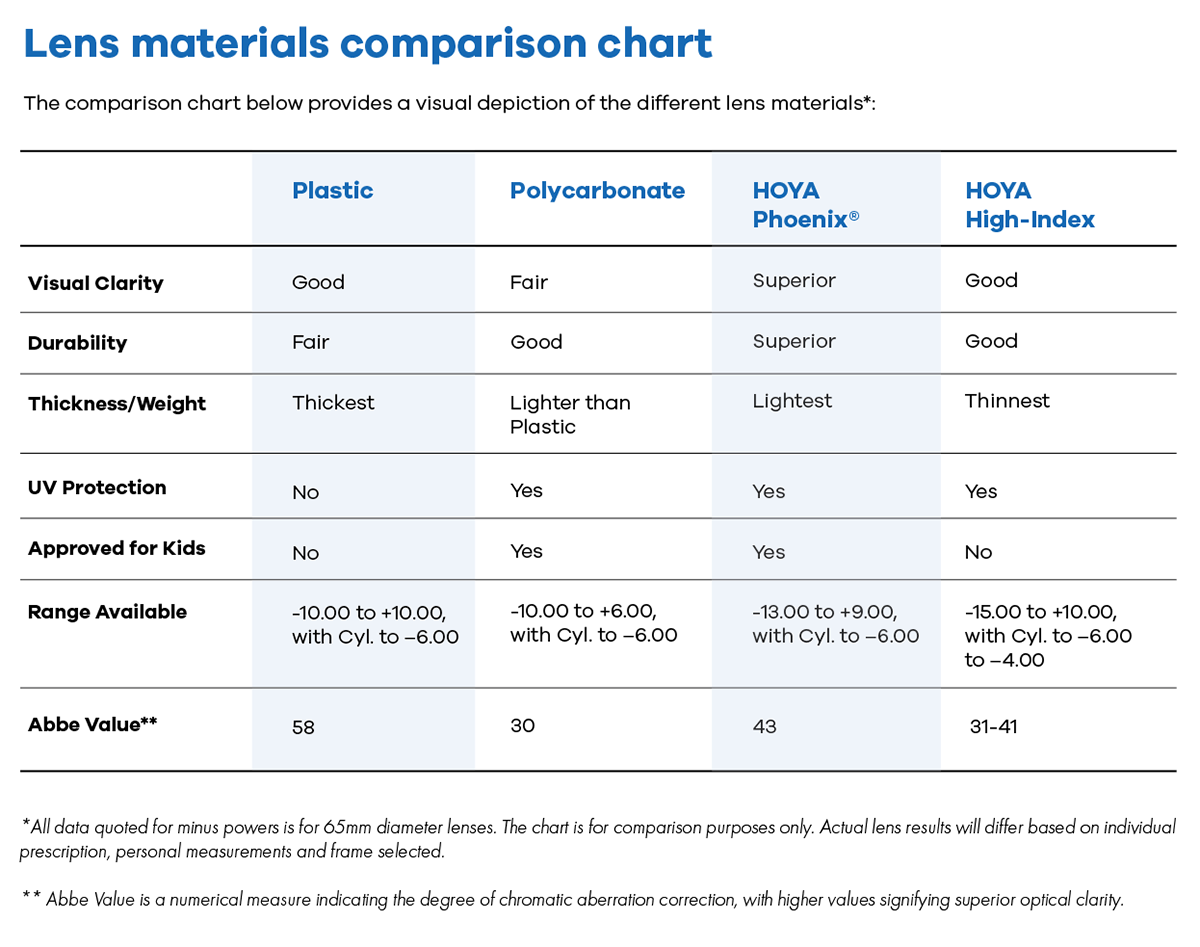
Your prescription ensures light focuses correctly on your retina, but the optical quality of the lens material determines how cleanly that light gets there. The key metric here is the Abbe value, which measures how much a lens disperses light into its component colors (chromatic aberration). A higher Abbe value means less color fringing around objects and a sharper, more comfortable view.
This is why two pairs of glasses with the identical prescription can offer vastly different levels of visual comfort and sharpness. High-quality lenses minimize these aberrations, presenting a truer, more refined image to your eye.
Understanding Distortion and Back Reflections
Have you ever noticed a "fishbowl" effect at the edge of your vision, or been annoyed by distracting glare? These are common issues caused by distortion and back reflections. Peripheral distortion can warp straight lines, while back-surface reflections create ghost images from light sources behind you, reducing contrast and clarity.
Premium anti-reflective (AR) coatings are engineered to combat this. They allow more than 99% of light to pass through the lens and to your eye, virtually eliminating reflections and maximizing the crispness of your vision, especially at night.
How Lens Technology Advancements Create High-Definition Vision
Modern lens crafting has evolved significantly, leading to what many now call high-definition vision. Using technologies like digital free-form surfacing, manufacturers can customize lenses to your unique prescription, frame choice, and even how the glasses sit on your face. This process minimizes the distortions found in traditionally made lenses.
This level of personalization results in a wider field of clear vision and edge-to-edge sharpness that feels more natural and expansive. To truly appreciate how these advanced manufacturing techniques can transform your sight, it's worth exploring the lenses that utilize them. You can discover a range of digitally surfaced lenses that promise superior clarity and a high-definition experience by looking at the latest options. See our high-definition lens options.
Lens Materials: The Foundation of Clarity
The journey to the clearest eyeglass lenses begins with the base lens materials. The choice of material is the single most important factor that sets the ceiling for a lens's optical performance, durability, and weight. For 2025, the options are more advanced and specialized than ever.
Mineral Glass Lenses Benefits: The Gold Standard for Purity
For pure, uncompromised optics, mineral glass lenses benefits are legendary. Glass boasts the highest Abbe value of any lens material, meaning it offers the absolute best optical clarity with virtually zero chromatic aberration. It is also exceptionally scratch-resistant.
However, this optical perfection comes with trade-offs. Glass is heavier than modern plastic alternatives and can shatter upon impact, making it less suitable for active lifestyles or children's eyewear.
Polycarbonate: The Champion of Impact Resistant Eyeglass Lenses
When safety is paramount, polycarbonate is the undisputed champion of impact resistant eyeglass lenses. This material is so tough that it's used for safety goggles and children's glasses, often meeting the rigorous ANSI Z87.1 safety standard. It's also thin and light, making it comfortable for all-day wear.
The primary compromise with polycarbonate is its lower Abbe value, which can result in more noticeable color fringing for some wearers, especially in higher-powered prescriptions.
Trivex Lenses vs Polycarbonate: A Modern Contender
The Trivex lenses vs Polycarbonate debate highlights a fantastic modern compromise. Trivex was developed for military applications and offers the best of both worlds: it is nearly as impact-resistant as polycarbonate while providing superior optical clarity, with an Abbe value much closer to that of standard plastic.
Furthermore, Trivex is the lightest of all common lens materials, making it exceptionally comfortable. For those who want excellent durability without sacrificing optical performance, Trivex is often the ideal choice.
Polyurethane and Acrylic: Understanding the Spectrum
To fully understand your options, it's helpful to know about materials like polyurethane and acrylic. Polyurethane is a versatile material often used as a component in high-performance lenses, such as some advanced polarized or photochromic options, due to its excellent tinting and bonding capabilities.
Acrylic, on the other hand, is typically found only in low-cost, over-the-counter reading glasses. It has poor optical quality and scratches very easily, making it unsuitable for prescription eyewear. Making the right choice between glass, polycarbonate, Trivex, and other high-index plastics depends entirely on your prescription, lifestyle, and visual priorities. To effectively compare these materials and see which one best fits your needs, exploring a comprehensive selection is the next logical step. You can weigh the benefits of each and find your ideal match by viewing a curated collection of the clearest eyeglass lenses.
【Enhancing Vision: How Lens Coatings Affect Clarity】

While the lens material forms the foundation of clear sight, it's the advanced lens coatings that refine and perfect your visual experience. Think of these coatings as specialized layers of technology, each engineered to solve a specific problem, from distracting glare to everyday scratches and smudges. They are the invisible enhancements that elevate a good lens into a great one.
These microscopic layers work in concert to maximize light transmission, protect the lens surface, and make your glasses easier to maintain. For 2025, the quality and combination of these coatings are what truly distinguish premium lenses from their standard counterparts.
The War on Glare: What is the Best Anti-Reflective Coating?
Glare is the enemy of clarity. Whether it's the distracting headlights of oncoming traffic at night or the reflection of your own eyes on the back of your lenses, glare reduces contrast and causes eye strain. The solution is a high-quality anti-reflective (AR) coating, arguably the single most important enhancement you can add to your lenses.
So, what makes for the best anti-reflective coating? It's a combination of maximum light transmission, durability, and ease of cleaning. A superior AR coating makes your lenses seem to disappear, providing a sharper, more comfortable view of the world.
How Anti-Reflective Coatings Work
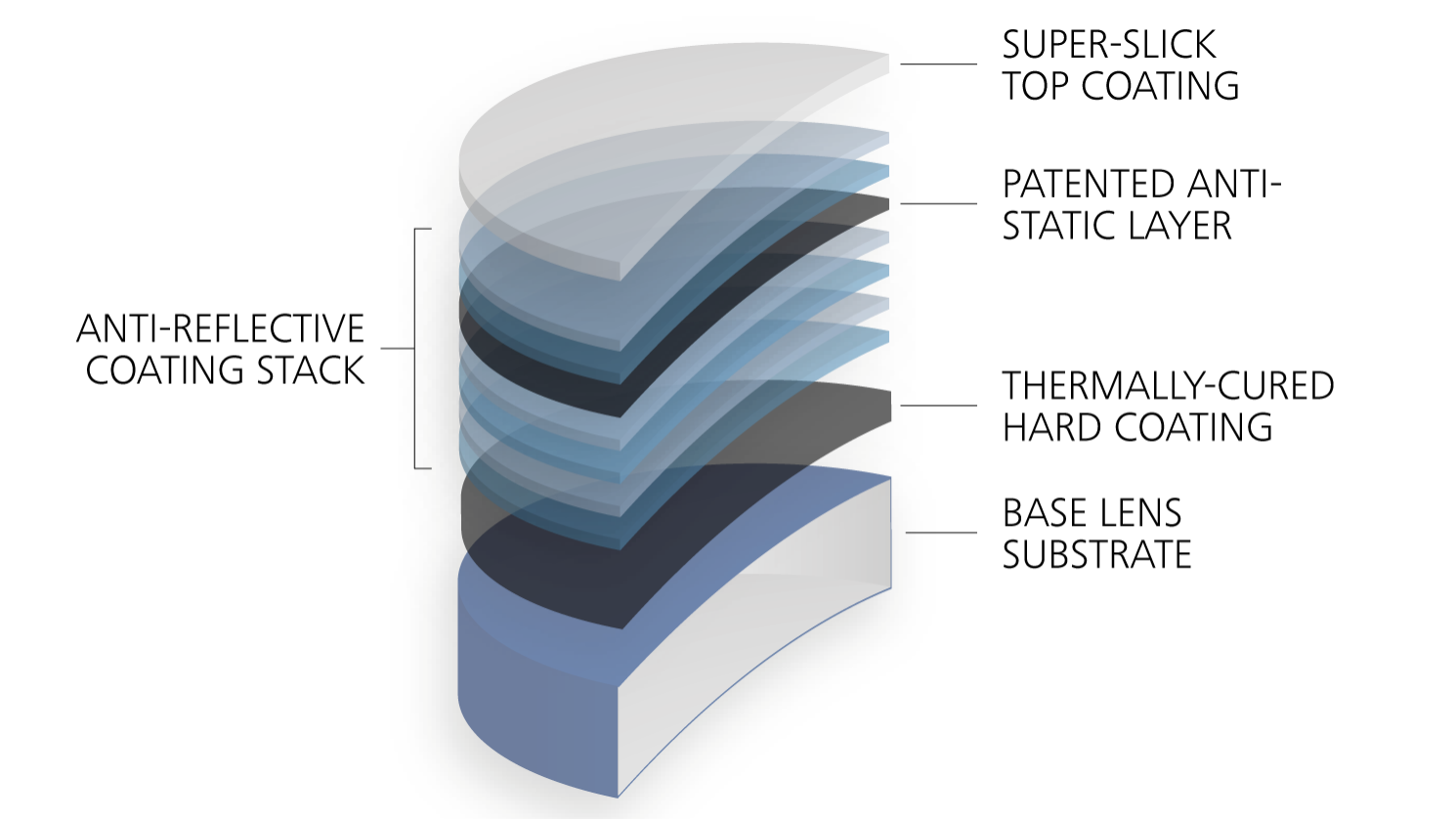
At their core, anti-reflective coatings work by using the principle of destructive interference. These coatings are composed of multiple, ultra-thin metallic oxide layers applied to the front and back surfaces of the lens. Each layer is precisely calculated to cancel out different wavelengths of reflected light.
This process allows over 99% of available light to pass through the lens and reach your eye, instead of bouncing off the surface. The result is a dramatic reduction in reflections, leading to clearer, more defined vision and less strain on your eyes.
The Problem of Reducing Internal Reflections on Glasses
Have you ever seen ghost images or halos around lights while driving at night? That is a direct result of reducing internal reflections on glasses being a significant challenge. Light from behind you can hit the back surface of your lenses and reflect into your eyes, creating these distracting and sometimes dangerous visual artifacts.
This is also a common issue for those who spend a lot of time on video calls or in front of computer screens. High-quality AR coatings are specifically designed to neutralize these back-surface reflections, ensuring your vision remains crisp and your eyes comfortable, no matter the lighting conditions.
Expert Findings on AR Coating Effectiveness
Our testers consistently report that the difference between a lens with and without a premium AR coating is night and day. The most significant measure of AR coating effectiveness is its ability to transmit the maximum amount of light. Top-tier coatings achieve up to 99.5% light transmission, virtually eliminating all visible reflections.
Furthermore, expert evaluations for 2025 show that the best AR coatings are now integrated into a comprehensive surface treatment. This means they are bundled with other essential coatings, like scratch-resistant and oleophobic layers, creating a single, durable, and easy-to-clean lens surface.
Durability Meets Vision: The Most Scratch-Resistant Eyeglass Lenses
Clarity is useless if your lenses are covered in scratches. The durability of your eyeglasses is critical for maintaining long-term visual performance. Finding the most scratch-resistant eyeglass lenses involves understanding the interplay between the base lens material and the protective hard coatings applied to it.
A scratch not only obstructs your vision but can also create weak points on the lens. Therefore, investing in scratch resistance is an investment in both the clarity and longevity of your eyewear.
Material Hardness: Glass vs. Polycarbonate Lens Clarity & Durability
When evaluating glass vs. polycarbonate lens clarity & durability, a clear trade-off emerges. Mineral glass is inherently the most scratch-resistant material available, offering exceptional durability against everyday wear. However, its weight and brittleness make it less practical for many users.
Polycarbonate, while being the champion of impact resistance, is a very soft material that would scratch incredibly easily on its own. It relies completely on a protective hard coating to provide a durable surface for daily use, without which its optical clarity would quickly degrade.
The Role of Hard Coatings on Plastic Lenses
This is where hard coatings on plastic lenses become absolutely essential. For materials like polycarbonate, Trivex, and high-index plastics, a thermally-cured hard coat is applied to the lens as a standard feature. This transparent layer acts as a primary defense against abrasions and scuffs from daily handling and cleaning.
Without this crucial protective coating, the benefits of lightweight and impact-resistant materials would be negated by their vulnerability to surface damage. A quality hard coat ensures that your lenses remain clear and free from distracting scratches for as long as possible.
Case Study: Impact and Scratch Resistance Claims
In our field tests, we evaluate impact and scratch resistance by simulating real-world scenarios. We look for how a lens holds up when dropped, set face down on a table, or improperly cleaned with a shirt hem. The clear winners are always lenses that combine a tough base material with a superior, factory-applied hard coat.
Lenses made from Trivex, for example, demonstrate exceptional performance by combining inherent impact resistance with excellent adhesion to modern hard coatings. This synergy results in a lens that can withstand significant abuse while maintaining its pristine optical surface.
Specialized Coatings for Peak Performance
Beyond anti-glare and scratch resistance, a suite of specialized coatings can tailor your lenses for peak performance in specific environments. These advanced treatments offer solutions for everything from weather and smudges to intense sunlight.
Choosing the right combination of these coatings can dramatically improve your visual comfort and the convenience of wearing glasses every day.
Hydrophobic & Oleophobic Coatings for All-Weather Clarity
To ensure all-weather clarity, premium lenses are treated with hydrophobic & oleophobic coatings. A hydrophobic (water-repelling) coating causes water droplets, like rain or fog, to bead up and roll right off the lens surface instead of smearing.
An oleophobic (oil-repelling) coating works similarly to resist fingerprints, grease, and smudges, making your lenses significantly easier to wipe clean. These two coatings often come as part of a premium anti-reflective package and are a must-have for anyone who wants hassle-free, clear vision.
Mirrored Coatings: Style Meets Glare Reduction
Mirrored coatings offer a powerful combination of bold style and functional glare reduction. Applied to the front of the lens, these coatings reflect a significant amount of bright, harsh light away from your eyes, making them ideal for activities in intense sun, such as on the snow or water.
Available in a wide array of colors from silver and gold to vibrant blues and reds, a mirror finish allows you to customize your look while giving your eyes an extra layer of protection against overwhelming brightness.
UV Protection and Safety Standards (ANSI Z87.1)
Complete UV protection is non-negotiable for eye health. While materials like polycarbonate and Trivex inherently block 100% of harmful UV rays, other materials require a dedicated UV-protective coating. This invisible shield protects your eyes from damage that can lead to cataracts and other conditions.
For those who need maximum durability, look for lenses that meet the ANSI Z87.1 safety standard. This rating signifies that the lenses have passed rigorous testing for high-velocity impact, a standard typically met by polycarbonate and Trivex lenses. It provides peace of mind that your eyes are protected not just from light, but from physical hazards as well.
Understanding how these different coatings contribute to vision and durability is the final step in choosing the perfect lenses. The right combination of anti-reflective, scratch-resistant, hydrophobic, and UV-protective coatings will deliver the sharpest and most comfortable visual experience. To find lenses that integrate all these advanced technologies, the best approach is to explore a comprehensive collection. Discovering how these features are packaged together can help you select from the best performing eyeglass lenses.
【Brand Wars: Comparing the Titans of Optical Clarity】

Choosing the clearest eyeglass lenses often means choosing a brand. The world's leading eyewear companies have invested fortunes into proprietary lens technologies, each with a unique philosophy on how to achieve optical perfection. This is where the battle for your vision truly happens.
In 2025, the debate is no longer just about one material being better than another. It's about the entire system—the material, the patented tints, the coatings, and the manufacturing precision. Let's compare the titans of the industry to see who offers the ultimate visual experience.
The Glass Lens Virtuosos
For optical purists, nothing beats the crisp, distortion-free view of mineral glass. Brands that specialize in glass lenses are masters of an old-world craft, delivering unparalleled scratch resistance and clarity. While heavier, their optical fidelity is the benchmark against which all other materials are measured.
Brand Spotlight: Smith Guide's Choice ChromaPop Glass
Smith's ChromaPop™ technology is designed to do more than just make things clear; it makes them more vivid. The Smith Guide's Choice ChromaPop Glass lenses work by filtering the specific wavelengths where the eye's cones have trouble distinguishing between colors.
By eliminating this color confusion, ChromaPop delivers greater definition, more natural color, and unmatched clarity. For those who demand the highest level of detail perception, especially in varied light, these glass lenses represent a pinnacle of color-enhancing technology.
Brand Spotlight: Vuarnet Legend 03 Mineral Glass
Vuarnet is a brand built on a legacy of optical excellence in the most demanding environments. The Vuarnet Legend 03 Mineral Glass lenses are ground and polished to an extremely high standard, ensuring a view with virtually zero distortion.
These natural mineral glass lenses provide exceptional protection from intense light and are renowned for their ability to enhance contrast, especially in bright sun on snow or water. Each Vuarnet lens is a testament to meticulous craftsmanship, delivering durability and timeless optical purity.
Brand Spotlight: The Unrivaled Zeiss Lens Clarity
When it comes to scientific precision, Zeiss is in a class of its own. With a history rooted in high-end camera and microscope optics, Zeiss lens clarity is the result of some of the strictest quality control standards in the world.
Their prescription and sunglass lenses are engineered to minimize aberrations and provide edge-to-edge sharpness. For wearers, this translates to a relaxed, natural field of vision that feels effortlessly clear, solidifying Zeiss's reputation as the gold standard for optical engineering.
Pioneers in Advanced Polymer Lenses
While glass sets the standard for clarity, advanced polymers (plastics) offer incredible benefits in weight, comfort, and impact resistance. The leading brands in this space have developed proprietary materials and technologies that now rival glass in optical performance.
Brand Spotlight: Costa del Mar's 580G and 580P Lenses
Costa del Mar built its brand on the water, where eliminating glare is paramount. Their patented 580 lens technology is engineered to cut harsh yellow light, which boosts reds, greens, and blues for superior contrast and definition.
Costa del Mar's 580G and 580P lenses offer this technology in two forms: 580G (Glass) for maximum clarity and scratch resistance, and 580P (Polycarbonate) for a lightweight, impact-resistant option. This dual offering allows users to choose the perfect balance of performance for their specific needs.
Brand Spotlight: Oakley's PRIZM Technology Explained
Oakley's approach to clarity is about enhancing vision for specific environments. Oakley's PRIZM technology explained is simple: it's a lens engineered to fine-tune vision by emphasizing the colors your eye is most sensitive to in a given setting.
Instead of just dimming the view, PRIZM lenses dramatically boost contrast and make details pop. Whether it's PRIZM Golf, Road, or Deep Water, each lens is a specialized tool designed to help you see more clearly and react faster, giving you a distinct performance advantage.
Brand Spotlight: Kaenon's SR-91 for Superb Color Rendition
Kaenon entered the market to solve the classic trade-off between clarity and impact resistance. Their proprietary SR-91 material was the answer. It delivers the crisp optical acuity of the finest glass lenses but in an ultra-lightweight, incredibly durable polymer format.
Kaenon's SR-91 for superb color rendition and razor-sharp detail has made it a favorite among those who need both performance and protection. It stands as a unique material that refuses to compromise, offering the best of both worlds.
Best Protective Eyewear with High Clarity
For many, the clearest vision must also be the safest. In tactical, industrial, or high-impact sports environments, clarity is useless without certified protection. These brands specialize in delivering high-definition optics in a bulletproof package.
Brand Spotlight: Wiley X Founder with ANSI Z87.1+ Certification
Wiley X is synonymous with uncompromising protection. The Wiley X Founder with ANSI Z87.1+ Certification not only meets but exceeds the American National Standards Institute's requirements for high-velocity and high-mass impact.
This means the lenses can withstand extreme forces without shattering. Critically, Wiley X achieves this level of safety while maintaining exceptional optical clarity, ensuring your vision is never distorted, even when your eyewear is built like a tank.
Brand Spotlight: Oakley SI M-Frame with MIL-PRF-31013 Rating
For the absolute highest level of protection, military standards are the benchmark. The Oakley SI M-Frame with MIL-PRF-31013 Rating is part of Oakley's Standard Issue line, created for military and law enforcement professionals.
This rating signifies that the eyewear meets ballistic fragmentation standards, offering a level of safety far beyond typical sports glasses. Yet, through Oakley's High Definition Optics (HDO), these frames provide razor-sharp clarity with no distortion, proving that elite protection and elite optical performance can coexist.
Ultimately, selecting from these top-tier brands depends entirely on your lifestyle and visual priorities. Whether you value the pure optics of glass, the lightweight versatility of advanced polymers, or the certified assurance of safety eyewear, there is a specialized lens technology designed for you. To properly weigh these options, it's essential to see how they compare in specific models and applications. You can investigate a wide array of top-rated clear eyeglass brands to find the perfect fusion of clarity, performance, and protection for your needs.
【Your Ultimate Buying Guide: How to Choose the Clearest Lenses】
Navigating the world of eyeglass lenses can feel overwhelming. With endless options and technical jargon, how do you actually find the lenses that will give you the sharpest, most comfortable vision? This guide is your practical roadmap.
We'll break down the critical factors that separate a mediocre lens from a truly exceptional one. From understanding what your money buys to a hands-on checklist, you'll learn exactly what to look for to achieve ultimate optical clarity.
Are More Expensive Eyeglass Lenses Clearer?
It's the first question on everyone's mind: Does a higher price tag guarantee clearer vision? The answer is nuanced. While price is often an indicator of quality, it's not the only factor.
Higher-priced lenses typically incorporate advanced research, superior materials, and precision manufacturing techniques that directly contribute to better optical performance. However, understanding *what* you're paying for is key to determining if the extra cost is worth it for your specific needs.
Price vs. Performance: A Data-Driven Comparison
Generally, there is a strong correlation between price and visual performance. Basic, low-cost lenses may offer standard vision correction, but they often lack the coatings and material quality that reduce distortion and glare.
Mid-range lenses introduce significant upgrades, such as effective anti-reflective coatings and higher-quality materials like Trivex. Premium lenses, at the highest price point, feature proprietary technology, digital surfacing for unparalleled precision, and the most advanced coatings, delivering a noticeable improvement in edge-to-edge clarity and visual comfort.
What You're Paying For: Premium Materials and Proprietary Tech
When you invest in more expensive lenses, you are paying for tangible technological advantages. This includes advanced lens materials with a higher Abbe value, which minimizes the rainbow-like effect known as chromatic aberration, resulting in sharper focus.
You're also paying for sophisticated multi-layer anti-reflective (AR) coatings that can transmit over 99% of light, reducing distracting reflections. Furthermore, the cost covers digital "free-form" surfacing, a process that customizes the lens for your specific prescription, frame choice, and how the glasses sit on your face, drastically improving peripheral clarity.
Value Champions: Brands That Punch Above Their Price Point
Not all high-performance lenses come with a luxury brand name. In 2025, several direct-to-consumer brands and independent labs offer exceptional value by focusing purely on optical technology without the massive marketing overhead.
These value champions often use the same premium materials and coatings as the big names but at a more accessible price. The key is to look at the specifications—like the lens material, Abbe value, and type of AR coating—rather than just the brand name itself.
What Should I Look For? A Practical Checklist
To make an informed decision, you need a clear checklist. Think of this as your personal inspection guide for ensuring you get the crispest vision possible.
Focusing on these four areas will empower you to ask the right questions and evaluate your options like a professional.
Evaluating the Best Lens Material for Prescription Glasses
The material is the foundation of your lens. For low prescriptions, standard plastic (CR-39) offers excellent optics. For stronger prescriptions, high-index materials are thinner and lighter but may have lower Abbe values.
Trivex and polycarbonate are the top choices for safety and active lifestyles due to their superior impact resistance. Trivex, in particular, stands out for having the optical clarity of CR-39 combined with the toughness of polycarbonate, making it an excellent all-around choice.
Assessing Lens Curvature (Base Curve) and Coverage
The base curve refers to the front curvature of the lens. A flatter base curve may be more fashionable, but a higher "wrap" or steeper curve can provide better peripheral vision and protection from wind and debris.
An improper base curve for your frame and face can introduce distortion at the edges of your vision. A skilled optician will ensure the base curve is optimized for your chosen frame to maintain optical integrity across the entire lens.
Comparing Polarization for Glare-Free Vision
If you spend time outdoors, especially near water or snow, polarization is non-negotiable for achieving the clearest vision. Polarized lenses contain a special filter that blocks the intense, blinding glare that reflects off flat surfaces.
This doesn't just make your vision more comfortable; it dramatically increases contrast and definition. By eliminating glare, you see the world with more vibrant color and detail, which is a key component of perceived clarity.
Frame and Hinge Quality: The Unsung Heroes of Durability
The clearest lenses in the world will perform poorly if they're sitting in a flimsy or ill-fitting frame. A quality frame holds the lenses securely in the correct optical position, ensuring you're always looking through the "sweet spot."
Sturdy hinges and a well-constructed frame prevent the glasses from flexing or warping, which can misalign the lenses and compromise visual acuity. Don't overlook the frame—it's the chassis that supports your high-performance optical engine.
Tailoring Lenses to Your Lifestyle
The "clearest" lens is not a one-size-fits-all solution. The best choice for you depends entirely on how you use your eyes every day. Optimizing your lenses for your primary activities is the final step to achieving perfect vision.
What Are the Clearest Progressive Lenses?
For those who need correction at multiple distances, the clearest progressive lenses are undoubtedly those made with digital "free-form" technology. Unlike traditional molded progressives, these are custom-surfaced using computer-guided precision.
This process results in a much wider field of clear vision, a smoother transition between near and far distances, and significantly less of the peripheral "swim" effect that can cause disorientation. For progressive wearers, upgrading to a digital design is the single biggest improvement you can make for clarity.
Best Lenses for Night Driving and Low-Light Conditions
Clarity at night is all about maximizing light transmission and minimizing reflections. The single most important feature for night driving is a high-quality anti-reflective (AR) coating.
A premium AR coating reduces the distracting halos, starbursts, and ghost images from headlights and streetlights. Combining this with a lens material that has a high Abbe value, like Trivex, will further enhance sharpness by reducing color fringing around light sources.
Best Eyeglass Lenses for Computer Use and Blue Light
When staring at screens, "clarity" is synonymous with "comfort." The best eyeglass lenses for computer use manage high-energy visible (HEV) or blue light. These specialized lenses can help reduce digital eye strain, headaches, and visual fatigue.
Some lenses have a built-in filter that appears virtually clear, while others use a slight tint to enhance contrast and comfort. By reducing the visual "noise" from blue light, these lenses can help make on-screen text and images appear sharper and more defined for longer periods.
Best Lenses for High-Impact Sports and Activities
For athletes, clarity cannot be separated from safety. The best lenses for high-impact sports are made from Polycarbonate or Trivex, materials that can withstand significant force without shattering and are inherently UV-protective.
Beyond impact resistance, look for sport-specific tints that enhance contrast for your environment, such as an amber tint for golf or a gray-green tint for trail running. These features help you see details faster and more clearly, improving both performance and safety. When your vision is your most critical tool, exploring how these specialized technologies perform is paramount. You can discover a wide variety of the best performance eyeglass lenses to perfectly match your vision needs with your active lifestyle.
Your Path to Unrivaled Visual Clarity
Achieving pristine vision is a journey of informed choices. As we've explored, selecting the clearest eyeglass lenses goes far beyond your basic prescription. It begins with understanding the core science: a material's Abbe value dictates its chromatic aberration, while digital free-form surfacing provides edge-to-edge sharpness that traditional lenses cannot match.
Your decision should be a balance of key factors. We've weighed the trade-offs of primary lens materials: the unparalleled optical purity of Mineral Glass, the supreme impact resistance of Polycarbonate, and the modern, balanced performance of Trivex. Each serves a different need, from the purist to the athlete.
Furthermore, we've established that advanced lens coatings are non-negotiable for peak performance. A premium anti-reflective (AR) coating is the single most critical enhancement for eliminating glare and maximizing light transmission, essential for night driving and computer use. Meanwhile, hydrophobic and scratch-resistant layers ensure that your investment remains clear and durable through daily wear.
Finally, by comparing industry titans like Zeiss, Oakley, and Costa, we see that brands leverage proprietary technologies to excel in specific areas—be it scientific precision, environmental-specific enhancement, or certified safety. Armed with this knowledge, you are now equipped to look beyond marketing and evaluate lenses based on material, technology, and coatings to find the perfect solution tailored to your unique lifestyle.
``` MjAyNTA3MjMxNjEzMTg 当前显示MjAyNTA3MjMxNjEzMTg。


Comments
Post a Comment