Requires Article Input
To provide you with high-quality SEO content including the introduction, conclusion, meta title, and meta description, I need the actual article content. Please provide the text of the article you want me to process.
What are Prescription Lenses and Why Do You Need Them?

If you wear glasses, you rely on prescription lenses for glasses to see clearly. But what exactly are they, and why are they essential for so many people? Prescription lenses are custom-made optical lenses designed to correct specific vision problems, known as refractive errors. They are shaped and powered precisely to bend (refract) light onto the retina at the back of your eye, creating a clear image.
You need prescription lenses if you have conditions like myopia (nearsightedness), hyperopia (farsightedness), or astigmatism, which prevent your eyes from focusing light correctly on their own. Without correction, these conditions can lead to blurry vision, eye strain, headaches, and difficulty performing daily tasks like driving or reading. For people over 40, prescription lenses often also address presbyopia, the age-related loss of near focusing ability. By wearing corrective lenses, you provide your eyes with the precise lens power needed for sharp, comfortable vision.
Corrective Vision Essentials
Addressing refractive errors requires different types of corrective vision lenses, tailored to the specific issue and your lifestyle. Understanding these basics is key to getting the right eyeglasses prescription and selecting the right lenses for 2025.
Single Vision Lenses Explained
Single vision lenses are the most common type of prescription lenses. They contain a single lens power throughout the entire lens surface. These are used to correct vision for a single distance – usually either distance vision (for nearsightedness) or near vision (for farsightedness or simple reading glasses). If you have astigmatism that affects vision primarily at one distance, single vision toric lenses can also correct this. They are straightforward and suitable for many common vision correction needs.
Astigmatism Correction Options
Astigmatism is a common condition caused by an irregularly shaped cornea or lens, which causes light to focus unevenly. Astigmatism correction requires special toric lenses. Unlike standard lenses, toric lenses have different powers in different meridians (or orientations) of the lens. This compensates for the eye's uneven curvature, ensuring light focuses properly at a single point. Your prescription will include specific cylinder and axis measurements if you need astigmatism correction. Getting the precise measurements for toric lenses is critical for achieving clear vision and preventing distortion.
Progressive Lenses Fitting Guide
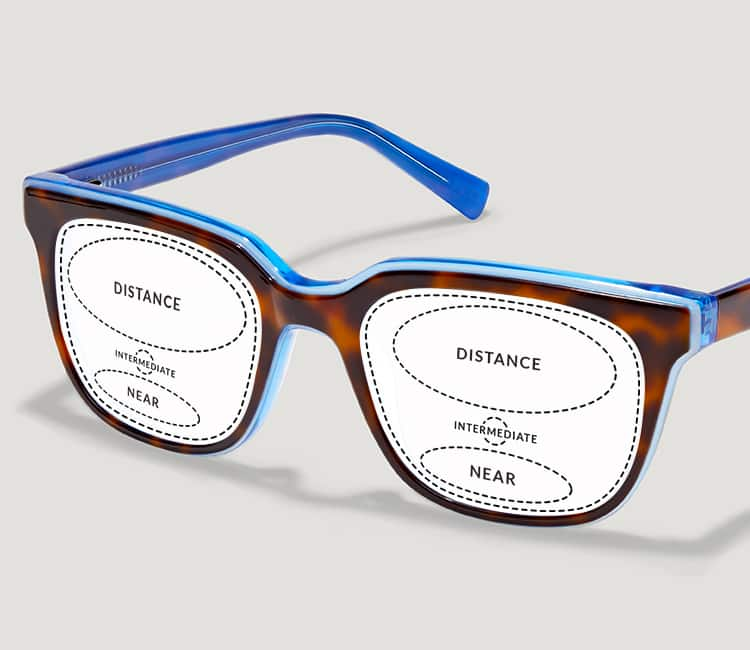
As we age, most people develop presbyopia, making it hard to focus on near objects. Progressive lenses offer a seamless solution for correcting presbyopia along with other vision issues like nearsightedness or farsightedness. These multi-focal lenses have different powers blended smoothly throughout the lens, transitioning from distance vision at the top, through intermediate vision in the middle, to near vision at the bottom. There's no visible line, unlike traditional bifocal or trifocal lenses. While progressive lenses are highly convenient, proper fitting is crucial. A detailed progressive lenses fitting guide involves precise measurements of how your eyes move and where they look through the lens for different tasks. This ensures the vision zones are correctly positioned for your individual eyes and frame choice. While progressive lenses offer a seamless transition, traditional options like bifocal reading glasses clear on top are also available for specific needs, particularly for reading while maintaining distance clarity above. Choosing between these options depends on your specific vision needs and preferences.
Understanding these corrective vision essentials helps you appreciate how prescription lenses for glasses are specifically designed to overcome various refractive errors and provide the clarity needed for a functional and comfortable visual experience. Knowing the purpose of single vision lenses, astigmatism correction, and progressive lenses empowers you when discussing options with your eye care professional or considering different spectacle lenses online. To explore the wide range of corrective lenses discussed here and find the perfect fit for your prescription, you can browse various prescription lenses for glasses designed to meet diverse vision correction needs, helping you see the world clearly in 2025.
Choosing the Right Lenses

Once you have your prescription, the next crucial step in getting new glasses in 2025 is selecting the right lens materials and coatings. This choice significantly impacts the comfort, durability, and visual performance of your eyeglasses. Understanding your options helps ensure your prescription lenses meet your lifestyle needs and provide optimal vision correction.
Lens Materials: Finding the Perfect Match for Your Needs
The material your corrective lenses are made from is fundamental. Different materials offer varying degrees of thickness, weight, durability, and optical clarity. Selecting the best lens material depends on several factors, including your prescription strength, daily activities, and budget.
Comparing CR-39, Polycarbonate, Trivex, and High-Index Lenses
Navigating the world of spectacle lenses means understanding the properties of common materials. Here's a look at the main types you'll encounter when choosing prescription lenses:
- CR-39 Plastic: This is the oldest and most basic
lens material. It's lightweight compared to glass but thicker than newer options, especially for higherprescriptions. CR-39 offers good optical clarity (high Abbe value) but is less impact-resistant than polycarbonate or Trivex. It's often the most affordable choice. - Polycarbonate: Introduced in the 1980s,
polycarbonate lensesare significantly more impact-resistant than CR-39. This makes them an excellent choice for children's glasses, safety glasses, and active individuals. They are also thinner and lighter than CR-39 for the sameprescription. However, polycarbonate has a lower Abbe value than CR-39, meaning it can show more chromatic aberration (color fringing) in strongprescriptions. - Trivex: Similar to
polycarbonate,Trivex lensesare also very impact-resistant and lighter than CR-39. Developed in 2001, Trivex often boasts better optical clarity (higher Abbe value) than polycarbonate and is slightly lighter. It's considered a premium alternative to polycarbonate for safety and durability.
What are the best lens materials for glasses? There's no single "best" material; it depends on your needs.
- For mild
prescriptionsand budget consciousness, CR-39 is viable. - For safety, durability, and children's glasses,
polycarbonateorTrivexare highly recommended due to their impact resistance. - For strong
prescriptionsthat require thinner and lighter lenses,high-index materialsare usually the best option.
Polycarbonate vs. Trivex: Which is better? Both are excellent choices for impact resistance. Trivex generally offers slightly better optical clarity and is marginally lighter, while polycarbonate is often more widely available and slightly less expensive. The choice between them often comes down to specific lab availability and minor preferences.
- High-Index Lenses: These
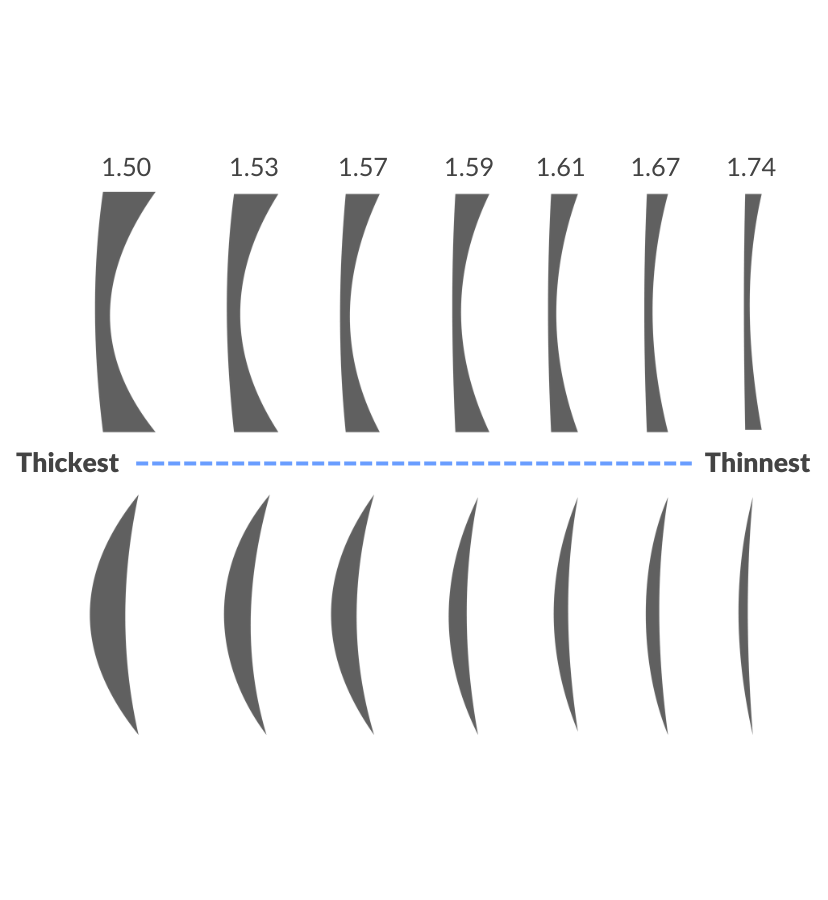
lens materialsare designed to be significantly thinner and lighter than standard plastic or polycarbonate, especially for strongprescriptionsfornearsightednessorfarsightedness. They bend light more efficiently, requiring less material thickness.High-indexmaterials come in various indexes (e.g., 1.60, 1.67, 1.74), with higher numbers indicating thinner lenses. While great for aesthetics and weight reduction, somehigh-index materialshave lower Abbe values, potentially affecting optical clarity at the edges for very strong prescriptions.
Are high-index lenses worth it? For moderate to strong prescriptions, many users find high-index lenses absolutely worth the added cost. The reduction in thickness and weight dramatically improves comfort and appearance, making the glasses easier to wear for extended periods. If your prescription is -/+ 2.00 or higher, exploring high-index options is advisable in 2025.
Coatings: Enhancing Your Vision and Protecting Your Lenses
Beyond the base lens material, applying various lens coatings can significantly improve the performance, durability, and appearance of your prescription lenses. These add-ons are crucial for maximizing your visual comfort and protecting your investment.
Understanding the Benefits of Different Coatings
Coatings add layers of functionality to your spectacle lenses, addressing common issues like glare, scratches, and UV exposure.
- Scratch Resistant Coating Durability: While no lens is truly scratch-proof, a
scratch resistant coating(also known as hard coat) makes lenses much more durable and resistant to minor abrasions from everyday cleaning and handling. This prolongs the lifespan of yourprescription lensesand maintains clarity. Its durability varies by quality, so inquire about the specific coating offered. - Anti-reflective Coating Benefits:
Anti-reflective coating(AR coating, oranti-glare coating) is highly recommended. It eliminates reflections from the front and back surfaces of the lenses. Benefits include:- Improved vision clarity, especially when driving at night or working under artificial lights.
- Reduced eye strain from glare.
- Enhanced cosmetic appearance, making the lenses seem almost invisible and allowing your eyes to be seen more clearly.
- Better performance for digital screen use.
- UV Protection for Eyeglasses: Just like sunscreen protects your skin,
UV protection coatingshields your eyes from harmful ultraviolet (UV) rays. Prolonged exposure to UV can contribute to serious eye conditions like cataracts and macular degeneration. Ensuring yourprescription lensesblock 100% of UVA and UVB rays is vital for long-term eye health. Many modern lens materials inherently block some UV, but a dedicated coating guarantees full protection. - Blue Light Blocking Lenses Effectiveness:
Blue light blocking lensesare designed to filter out a portion of high-energy blue light emitted by digital screens (computers, phones, tablets) and some artificial lights. While research on long-term effects is ongoing in 2025, many users report reduced eye strain and improved sleep patterns when using these lenses, particularly for prolonged screen time. The effectiveness varies depending on the specific coating or lens tint. For those spending significant time online, especially searching for glasses online, considering blue light filtration might be beneficial.
Choosing the right lens materials and coatings is as important as getting the correct prescription. By understanding the properties of different materials like CR-39, Polycarbonate, Trivex, and High-Index, and the benefits of coatings such as scratch resistant, anti-reflective, UV protection, and blue light blocking, you can make informed decisions that ensure your prescription lenses for glasses provide the best possible vision, comfort, and durability for your specific needs in 2025. To explore a wide array of options featuring these materials and coatings, tailored to various prescription strengths and lifestyles, you can browse prescription lenses for glasses online to compare features and find lenses that perfectly match your needs.
Where to Buy Prescription Lenses

Once you've determined your perfect lens materials and coatings, the next crucial step is deciding where to purchase your prescription lenses and frames in 2025. Consumers today have more options than ever, from clicking online to visiting a local optician. Each avenue offers distinct advantages and disadvantages.
Online Retailers: Convenience and Affordability at Your Fingertips
The rise of online optical shops has revolutionized the way people buy eyeglasses. Purchasing prescription lenses online offers unparalleled convenience, allowing you to browse extensive catalogs from the comfort of your home. It often comes with the promise of more competitive pricing compared to traditional brick-and-mortar stores, cutting out some overhead costs.
Comparing Online Eyeglasses Retailers
Navigating the online marketplace for spectacle lenses requires understanding the different players. Many platforms specialize in providing a wide range of corrective lenses and frames directly to consumers.
What are the best online eyeglasses retailers? There isn't a single "best" for everyone, as needs vary. However, popular choices like Warby Parker, Zenni Optical, GlassesUSA, and LensCrafters (which also has a significant online presence) are frequently cited. When evaluating them, consider factors like selection of prescription lenses, frame styles, virtual try-on tools, return policies, customer service, and pricing. Each platform has its strengths; for instance, some excel in budget-friendly options, while others focus on designer frames or specific lens technologies.
Understanding retailer policies is also vital. For example, the GlassesUSA return policy typically allows returns within a set period (often 14 days to a month) if you're not satisfied, though specifics can vary by product and reason. Always check the current policy before purchasing. Similarly, when considering Zenni Optical lens quality, reviews often highlight their affordability, but quality can be perceived differently depending on the complexity of your prescription and the specific lens options chosen. While they offer a wide array of prescription lenses, including high-index and various coatings, some users with very complex prescriptions might find the quality or fit less precise than a hands-on approach. Researching customer reviews and forums can offer insights into real-world experiences with lens quality from different online providers.
Exploring the options available online provides a vast selection of prescription lenses tailored to various needs and budgets, often including detailed descriptions of materials and coatings. Browse a wide range of prescription lenses for glasses online to easily compare specifications and prices across different types.
In-Person Shopping: Expertise and Personalized Service
While online shopping is convenient, buying prescription lenses in person remains the preferred method for many, offering distinct advantages that digital platforms can't fully replicate. This involves visiting opticians, optometrists' offices, optical chain stores, or even vision centers within big box retailers.
Exploring Options at Private Practices, Chains, and Big Box Stores
Each type of physical location provides a different experience. Private optometry practices often offer highly personalized service and access to a wide range of lens materials and frames, backed by the expertise of the eye care professional who knows your specific visual needs, potentially having performed your eyeglasses prescription near me. Optical chain stores like LensCrafters or America's Best combine professional service with a wider selection of frames and potentially faster turnaround times on some prescription lenses due to on-site labs. Vision centers in big box stores may offer competitive pricing, particularly on basic corrective lenses.
Advantages of buying in person are numerous. You receive hands-on assistance with frame selection and fitting, ensuring comfort and proper alignment, which is crucial for effective vision correction, especially with complex prescription lenses like progressives. Opticians can provide expert advice on the best lens materials, coatings, and frame-lens combinations for your specific prescription and lifestyle. Adjustments and repairs are easily handled. Furthermore, you can physically inspect the lens quality and appearance before committing to a purchase. Regarding specifics like LensCrafters discount accuracy, while they frequently run promotions, the actual discount applied depends on the specific frames, prescription lenses, and insurance coverage, requiring direct inquiry and confirmation at the store.
Online vs. In-Person: Which is the Best Choice for You?
Choosing where to buy your prescription lenses for glasses in 2025 boils down to weighing convenience, cost, and service. Both online and in-person methods have merits, making the decision highly personal.
Weighing the Pros and Cons
The debate of online vs. in-person glasses purchase centers on several factors. Online offers lower prices and convenience, great for simple prescriptions and those confident in selecting and measuring frames themselves. Features like the Warby Parker virtual try on review highlight a way online retailers attempt to bridge the gap, allowing users to see how frames look on their face digitally, though this can't replicate the feel or fit of a physical frame. Online shopping is excellent for browsing a vast selection of prescription lenses, including various materials and coatings, and comparing prices directly.
However, there are instances where in-person purchase is highly recommended. These include individuals with complex or strong prescriptions (e.g., high astigmatism, progressive lenses, or significant prism correction) where precise measurements (like pupillary distance, optical center height) are critical and best taken by a professional. People requiring significant frame adjustments for proper fit, those new to wearing eyeglasses or corrective lenses, or anyone needing personalized guidance on lens materials and coatings benefit greatly from in-person service. If you've recently had an eyeglasses prescription near me and have questions about the results, discussing options directly with the eye care professional is invaluable. While online options for prescription lenses for glasses are expanding rapidly, the expertise and tactile experience of buying in person remain unmatched for certain needs and preferences. Exploring online prescription lenses for glasses can give you an idea of available options and pricing, which you can then compare with local offerings.
Saving Money on Prescription Lenses
Finding affordable prescription lenses for glasses without sacrificing quality is a key concern for many in 2025. Understanding how to navigate the market, decipher promotions, and leverage available benefits can lead to significant savings on your essential vision correction.
Decoding Discounts and Promotions: Are They Real?
Retailers frequently advertise sales and discounts on eyeglasses and corrective lenses. While many offers are legitimate ways to save, it's crucial to approach these promotions with a discerning eye to ensure you're getting a real deal.
Investigating Advertised Deals and Sales
Analyzing retailer pricing strategies involves looking beyond the headline percentage off. Some stores may inflate initial prices before applying a discount, making the final price seem like a bargain when it's actually closer to the standard market rate.
Understanding "false reference pricing" is essential here. This tactic involves presenting a product as being discounted from a much higher "original" price that the item rarely, if ever, sold for. This creates a false sense of urgency and value. Always compare prices across multiple retailers for the same prescription lenses and frames before making a purchase based solely on an advertised sale.
Insurance and Payment Options: Maximizing Your Savings
Leveraging your health benefits is one of the most effective ways to reduce the cost of prescription lenses. Both vision insurance and flexible spending accounts (FSA) or health savings accounts (HSA) are designed for this purpose.
Utilizing Vision Insurance and HSA/FSA Funds
Most vision insurance plans offer benefits specifically for prescription lenses, frames, and eye exams. These benefits often cover a portion of the cost or provide an allowance, significantly reducing your out-of-pocket expense for spectacle lenses. Review your specific plan details to understand coverage limits, co-pays, and which providers are in-network.
Using pre-tax dollars through an HSA or FSA is another smart payment option for prescription lenses. Funds in these accounts can typically be used to pay for qualified medical expenses, including eyeglasses and contacts, which include the cost of prescription lenses. Many retailers, including major online ones, accept these forms of payment. For example, GlassesUSA HSA/FSA acceptance is clearly stated on their platform, allowing customers to easily use these funds for their purchases. Knowing your precise eyeglasses prescription near me is the crucial first step before utilizing these funds to buy the right lenses.
Additional Tips for Saving Money
Beyond insurance and navigating sales, several practical strategies can help you be a budget-conscious buyer when purchasing prescription lenses.
Practical Strategies for Budget-Conscious Buyers
Consider generic or store-brand frames instead of designer options. The quality is often comparable, but the price difference is significant. When choosing prescription lenses, opt for necessary coatings like anti-reflective or scratch-resistant, but evaluate if every single add-on aligns with your budget and actual need.
Buying prescription lenses and frames online can often be more affordable than brick-and-mortar stores due to lower overhead. However, compare prices carefully, including shipping costs and potential return fees. Also, check for loyalty programs or email sign-up discounts offered by retailers. Exploring online prescription lenses for glasses options allows for easy comparison of costs and features across a vast selection, helping you find quality prescription lenses at competitive prices that fit your budget.
Maintaining Your Eyeglasses
Proper care and timely attention are crucial for extending the lifespan and maintaining the performance of your prescription lenses for glasses. Just like any precision instrument, spectacle lenses and frames require regular maintenance to ensure they continue to provide optimal vision correction and comfort throughout 2025.
Proper Lens Care: Extending the Life of Your Lenses
The clarity and durability of your corrective lenses depend heavily on how well you care for them. Scratches and damage don't just look bad; they can distort your vision and compromise the effectiveness of your prescription lenses. Establishing a routine for lens care is a small effort with significant long-term benefits.
Cleaning and Storage Tips
To properly clean your prescription lenses, always use a microfiber cloth specifically designed for eyewear. For stubborn smudges, rinse the lenses with lukewarm water first to remove any abrasive particles. Apply a small amount of pH-neutral soap or an approved lens cleaning solution. Gently rub the lenses, then rinse thoroughly. Dry with your clean microfiber cloth. Avoid using paper towels, facial tissues, or clothing, as these can scratch the delicate surfaces and lens coatings. Harsh household cleaners, ammonia, or acetone should never be used.
Proper storage is equally important. When you're not wearing your glasses, store them in a protective case. A hard-shell case offers the best protection against crushing or bending. Avoid leaving your glasses lens-down on surfaces. Extreme temperatures can damage frames and prescription lenses. Never leave your glasses on a car dashboard, especially in hot weather, as the heat can warp frames and crack lens coatings. Keeping your glasses safe ensures they last, helping you avoid needing to prematurely search for options like finding the lowest cost eyeglasses.
Adjustments and Repairs: Keeping Your Glasses in Top Shape
Even with careful use, frames can loosen or become bent over time. Loose screws, misaligned nose pads, or temples that no longer fit comfortably behind your ears are common issues. Addressing these minor problems promptly through optical adjustments can prevent them from worsening and causing damage to your prescription lenses or frame. Trying to force a bent frame back into shape yourself can sometimes lead to breaks.
When to seek professional help.
While minor tweaks like tightening a loose screw (using a tiny eyewear screwdriver) can be done at home, many issues require professional attention. If your frames are significantly bent, if nose pads need proper reshaping, or if temples feel too tight or loose, visit your optician or the store where you purchased your glasses. They have the specialized tools and expertise for precise eyeglasses repairs and adjustments that can restore the fit and comfort of your prescription lenses and frames without risking damage.
Scratched prescription lenses are generally not repairable and will likely require replacement to maintain clear vision. If frames are broken or cracked in a significant way, professional repair might be possible, but sometimes replacement is the more durable solution. Don't hesitate to consult a professional for an assessment. If professional adjustment or repair isn't feasible or cost-effective, exploring options for new prescription lenses for glasses might be necessary to restore optimal vision. Visiting this link allows you to easily browse and compare various lens and frame options available online, helping you find the right solution if repairs aren't the answer.
Beyond Lenses: Frames and Comfort
While the prescription lenses for glasses are essential for correcting your vision, the frame plays a critical role in your overall wearing experience. It holds the lenses in place, sits on your face, and contributes significantly to comfort, durability, and style throughout 2025. Choosing the right frame is just as important as selecting the right spectacle lenses.
How to Choose the Right Eyeglass Frames?
Selecting the perfect eyeglass frames goes beyond just liking the look. The right frame must be comfortable, durable, and suitable for your prescription lenses. It should also fit your face shape and lifestyle. Making an informed choice ensures your prescription eyeglasses provide optimal vision correction and comfort.
Frame Materials, Shapes, and Sizes for Optimal Fit
Choosing the right eyeglass frames involves considering several factors for an optimal fit. Materials vary widely, each offering different benefits. Acetate is a popular plastic, known for its rich colors and flexibility. Metal options include titanium, stainless steel, and monel. Titanium is lightweight, durable, and hypoallergenic, making it excellent for comfortable eyeglasses for sensitive skin. Stainless steel is also durable and corrosion-resistant. Monel is a common, less expensive alloy but can cause allergic reactions in some individuals.
Frame shape is key to complementing your face shape (e.g., round frames for square faces, angular frames for round faces). The bridge width, temple length, and lens width must match your facial measurements for a secure and comfortable fit that prevents slipping or pinching. An ill-fitting frame can cause discomfort and even affect how you look through your prescription lenses, potentially leading to distorted vision. When considering prescription eyeglasses, exploring different frame options is vital. Visiting a professional or checking resources like this guide on finding prescription eyeglasses can provide valuable insights into selecting frames that suit your needs and budget, potentially including options near you.
For those with sensitive skin, hypoallergenic materials like titanium or medical-grade silicone nose pads are crucial for comfortable eyeglasses. Some plastics can also be hypoallergenic. It's important to try on different materials and styles to see how they feel against your skin. Lightweight materials like titanium or air-rim frames can also enhance comfort, reducing pressure on the nose and ears. Finding the right frames for your prescription lenses for glasses ensures all-day comfort and wearability. Exploring various frame options is crucial, and you can start comparing different types and materials available for prescription lenses for glasses by visiting selecting the perfect frame to find a style that fits both your face and your comfort needs.
Eye Exam Frequency: Keeping Your Vision Healthy
Maintaining vision health is paramount, and regular eye exam frequency is a cornerstone of this. An eye exam does more than just update your prescription for prescription lenses for glasses; it's a vital check-up for your overall eye health, allowing early detection of diseases like glaucoma, macular degeneration, and cataracts, which may not have obvious symptoms initially.
Recommendations for Regular Checkups
The recommended eye exam frequency varies depending on age, health status, and family history. For most adults between 18 and 60, a comprehensive eye exam every one to two years is generally recommended. However, individuals who wear prescription lenses, have diabetes, high blood pressure, or a family history of eye disease may need regular checkups more frequently, often annually. Children typically need their first exam around 6 months, again before starting school, and then every one to two years. Seniors (age 61 and older) are advised to have yearly eye exams due to an increased risk of age-related eye conditions. Following these recommendations for regular checkups ensures that any changes in your vision or eye health are identified promptly, allowing for necessary adjustments to your prescription lenses for glasses or treatment plans. After your eye exam, if your prescription has changed or you need new glasses, comparing options for prescription lenses for glasses is essential. You can easily browse a wide range of choices to meet your updated vision needs by visiting update my prescription glasses to find suitable options.
Conclusion
To generate a relevant and high-quality conclusion, I require the full content of the article. The conclusion will summarize the key takeaways and reinforce the main message once the article content is provided.


Comments
Post a Comment