Eyeglasses Prescription Near Me 2025
Ready for clearer vision? Discovering where to get an "eyeglasses prescription near me" is the first step to finding your perfect pair. This guide helps you navigate obtaining your vital vision details and explores convenient options for purchasing prescription eyewear, including exploring selections available directly via this link: https://www.mozaer.com/search?q=eyeglasses prescription near me.
【Understanding Prescription Eyeglasses】
What are Prescription Eyeglasses?
Prescription eyeglasses are a common form of corrective eyewear. They are specifically designed with lenses tailored to your individual vision needs. The primary purpose of prescription eyeglasses is to improve visual acuity.
These corrective lenses help your eyes focus light properly onto the retina. This creates clear images, compensating for the way your eyes naturally refract light. They are essential for many people to see clearly and comfortably.
Prescription glasses address a range of common vision problems. Getting the right prescription is key to correcting these issues effectively.
One common problem is Myopia, also known as nearsightedness. If you have myopia, distant objects appear blurry, while close objects are clear. Prescription lenses for myopia help you see faraway things sharply.
Another issue is Hyperopia, or farsightedness. With hyperopia, close objects are blurry, but distant objects are clearer. Eyeglasses for hyperopia help improve focus on nearby items.
Astigmatism is a condition causing blurred or distorted vision at all distances. It's often due to an irregularly shaped cornea or lens. Prescription lenses correct this distortion, providing clearer vision.
Presbyopia is an age-related condition, typically starting around your 40s. It makes it difficult to focus on close objects. Reading glasses or multifocal prescription eyeglasses are used to correct presbyopia.
Are Prescription Glasses Worth It?
Deciding if prescription eyeglasses are worth the investment is a common consideration for anyone experiencing vision issues. For many people, the advantages significantly outweigh the potential drawbacks in 2025.
The primary benefit is dramatically improved vision. Wearing corrective lenses provides sharp, clear sight, allowing you to perform daily tasks with ease. This enhanced visual acuity affects everything from reading to driving.
Correcting your vision also often reduces eye strain. When your eyes don't have to work as hard to focus, it lessens fatigue. This can prevent headaches and discomfort commonly associated with uncorrected vision problems.
Improved vision is also crucial for safety. Activities like driving, operating machinery, or even walking on uneven surfaces become much safer when you can see clearly. Prescription glasses enhance your ability to perceive your surroundings accurately.
Beyond function, prescription eyewear can also be a stylish accessory. With countless frame styles, colors, and materials available, glasses can enhance your personal look and become part of your identity. Finding frames that suit your face shape and style is easy today.
However, it's important to consider potential downsides. The initial cost of prescription eyeglasses can be a significant factor, especially for premium lenses and frames. Prices vary widely depending on where you buy them and the complexity of your prescription.
Wearing glasses requires some maintenance. Regular cleaning is needed to keep lenses clear, and you need a safe place to store them when not in use to prevent scratches or damage.
There can also be an adjustment period when you first start wearing prescription glasses or get a new prescription. Some people experience temporary dizziness or distortion as their eyes adapt.
Like any item, glasses can be broken or lost, requiring replacement. This is a risk to consider, though many frames and lenses are now more durable.
Despite these potential drawbacks, the profound improvement in daily life, safety, and comfort makes prescription eyeglasses a worthwhile investment for those who need them. Finding the right pair that fits your needs and budget is key to experiencing these benefits. find the right eyewear
【Where to Buy Prescription Eyeglasses】

Finding the right place to buy prescription eyeglasses is a key step after getting your eye exam. You have several options available, each with distinct advantages and considerations. Knowing these can help you make the best choice for your vision needs and budget.
The main choices typically fall into two categories: buying your glasses online or purchasing them from a physical store. Both methods offer ways to get your corrective lenses, but the experience, selection, and services differ significantly. Understanding these differences is crucial for making an informed decision about your eyewear.
Online Eyeglass Retailers
Buying prescription eyeglasses online has become increasingly popular. It offers a convenient way to shop for new frames and lenses without leaving your home. Many online retailers provide a wide array of styles and lens options.
Benefits
A major advantage of online eyeglass retailers is convenience and accessibility. You can browse selections and make a purchase any time, day or night. This is especially helpful for busy individuals.
Online stores often feature a wider selection of frames than local shops. You can explore thousands of frame styles, colors, and materials from various brands, or the retailer's own line, giving you more options to find your perfect pair of glasses.
Competitive pricing is another key benefit. Online retailers often have lower overheads than brick-and-mortar stores, which can translate to lower prices on frames and lenses for customers. This makes getting new eyewear more affordable.
Many websites now offer virtual try-on tools. Using your webcam or by uploading a photo, you can see how different frames look on your face. While not a perfect substitute for trying on physical frames, it helps narrow down your choices.
Considerations
To buy prescription eyeglasses online, you need a valid prescription from a licensed eye care professional. This includes your sphere (SPH), cylinder (CYL), axis, and often your pupillary distance (PD). You are responsible for entering this information accurately.
A significant consideration is that you cannot physically try on frames before purchasing. You can't feel the weight or assess the true fit on your nose and ears. What looks good virtually might feel different in person.
You may be required to self-measure for your pupillary distance (PD). PD is the distance between the centers of your pupils and is essential for correctly positioning the optical center of your lenses. While many sites provide guides, inaccurate self-measurement can lead to poorly made glasses.
It's important to review the return policies and warranty information carefully. Policies vary widely; some offer free returns, while others charge fees. Understand the process if the glasses don't fit or if you have issues with the lenses.
In-Store Eyeglass Retailers
Purchasing prescription eyeglasses from a physical store, like an optical shop, optometrist's office, or large retailer's vision center, provides a different shopping experience. This traditional method offers face-to-face interaction and immediate services.
Benefits
In-store retailers offer professional fitting and adjustments. An optician or trained staff member can measure your pupillary distance accurately, ensure the frames fit comfortably on your face, and make necessary adjustments to the temples and nose pads.
The ability to physically try on frames is a major benefit. You can see exactly how frames look and feel, checking their weight, size, and style against your face in person. This helps ensure a comfortable and flattering fit for your eyewear.
Many in-store locations offer eye exams and prescription services on-site. You can get your vision checked and order your new glasses all in one place, simplifying the process. This integrated service is very convenient.
For some prescription eyeglasses, immediate availability might be possible, especially for simpler prescriptions and frames that are in stock. This means you might not have to wait days or weeks for your new glasses.
Considerations
Generally, prices for prescription eyeglasses at in-store retailers tend to be higher compared to online retailers. This difference is often due to the costs associated with maintaining a physical location, stocking inventory, and employing staff.
The selection of frames is often more limited compared to the vast inventory available online. While physical stores carry a curated range of styles, you won't typically find the sheer volume of options that many online retailers offer.
Shopping in-store also involves time and travel costs. You need to schedule a visit, travel to the location, and spend time browsing and getting fitted. This can be less flexible than shopping from home online.
Prescription Eyeglass Retailers Comparison
When choosing where to purchase your prescription eyeglasses, comparing different retailers is essential. Each offers unique advantages and disadvantages. Here's a look at some popular options based on available information.
Costco Optical
- Pros: Known for good prices and customer service. They offer quality frames and lenses for your vision correction needs. As of June 2025, single-vision lenses average around $66, with frames priced around $67. They carry a wide variety of designer sunglasses and accept most major insurance plans, making it easier to afford your eyewear.
- Cons: You need a Costco membership to purchase glasses there.
Zenni Optical
- Pros: Very affordable and offers a wide range of stylish frames. Their online shopping experience is easy to use, and they provide useful lens options. You can find both in-house designs and some name brands for your prescription glasses.
- Cons: Lacks physical in-store locations, so you can't try frames on in person. Some customers find the quality of less expensive frames to be variable.
Pair Eyewear
- Pros: Offers a unique concept where you buy a Base Frame and can customize it with interchangeable Top Frames. This allows you to change the look of your
prescription eyeglasseseasily. Top Frames start at $25. - Cons: You need a Base Frame for the Top Frames to attach to, which is an additional cost beyond the interchangeable tops.
Warby Parker
- Pros: Known for stylish and well-made frames that are durable. Their lenses include UV-blocking, scratch-resistance, and anti-reflective coatings as standard. The Try-at-Home program allows you to test up to five frames before committing to buying your
corrective eyewear. - Cons: Their reading glasses only go up to a +2.75 strength, which might not be sufficient for everyone needing higher magnification for presbyopia.
GlassesUSA
- Pros: Offers a wide range of reader lens strengths, starting as low as +0.25, catering to many vision needs. They have hundreds of frames to choose from and feature a virtual "mirror" feature to help you see how frames look. They also offer free shipping and returns, simplifying the process of getting your
optical correction. - Cons: Glasses with multifocal lenses, like progressives, tend to have a longer turnaround time for production and delivery.
Peepers
- Pros: Provides high-quality reading glasses options often at prices comparable to drugstores. All their reading glasses cost $29 or less, making them a very budget-friendly option for age-related vision issues. They offer a "Perfect Pair Finder" quiz, virtual try-ons, and even a vision test chart on their site.
- Cons: Returns are not free, which is a consideration if you need to exchange frames.
Look Optic
- Pros: Specializes in chic and fashionable frames. Their frames are often made from 100% recycled material, appealing to environmentally conscious consumers. They also offer a discount (25% off) if you recycle old frames with them when purchasing new
eyewear. - Cons: Not every style is available in every lens type, potentially limiting choices for complex
prescription eyeglasses.
Caddis
- Pros: Offers modern, geometric frame styles for those seeking unique
opticallooks. They provide a virtual try-on feature to help you visualize the frames. - Cons: Their prices are on the higher end, making them a more premium option for prescription glasses.
Other retailers
Beyond these options, you can also find prescription eyeglasses at large retailers like Walmart and Target, which often have optical departments. Private optometry practices are another common place to purchase glasses, often offering personalized service and high-quality frames.
Choosing the right retailer depends on your priorities: budget, convenience, selection, and the need for in-person fitting and service. Explore different options to find the best fit for your prescription eyeglasses needs.
Understanding where and how you can purchase glasses is a crucial part of addressing your vision correction. To find a wide array of options to meet various needs and preferences, you can explore different retailers. prescription eyeglasses
【How to Choose Prescription Eyeglasses】

Selecting the right pair of prescription eyeglasses is a significant decision that impacts both your vision and your appearance. With so many options available, understanding the key factors involved in choosing your corrective eyewear is crucial. This guide will walk you through the essential elements, from understanding your prescription to ensuring a perfect fit.
Making an informed choice about your glasses involves more than just picking a frame you like. It requires considering your specific vision needs, lifestyle, and personal style. Taking the time to understand these factors will help you find the ideal optical correction.
Understanding Your Prescription
Your prescription eyeglasses journey begins with your eye doctor's prescription. This document contains crucial details that determine the type of lenses you need to achieve clear vision. It's written in a specific format that includes various measurements and corrections.
Having an accurate and up-to-date prescription is paramount. Eye prescriptions can change over time, so using a recent one, ideally from within the last year or two (as of 2025), ensures your new corrective lenses will provide optimal vision correction.
Key components of an eyeglass prescription
Understanding the abbreviations on your prescription is key to ordering the correct prescription glasses. Each component addresses a specific aspect of your vision.
- Sphere (SPH): This value indicates the main power of the lens needed to correct nearsightedness (myopia) or farsightedness (hyperopia). A negative number means you are nearsighted, while a positive number indicates farsightedness.
- Cylinder (CYL): The cylinder number measures the degree of astigmatism, a common condition causing blurry vision due to an irregularly shaped cornea or lens. If this column is blank, you don't have astigmatism.
- Axis: If you have a CYL value, the Axis number (between 1 and 180 degrees) shows the orientation of the astigmatism correction. It indicates the direction the cylinder lens needs to be placed in your
prescription eyewearto correct the distortion. - Add: This stands for "addition" and is used for multifocal lenses like bifocals or progressives. It specifies the additional magnification power needed for reading or close-up work, typically added to the SPH power of the distance prescription.
- Pupillary Distance (PD): Your PD is the distance in millimeters between the centers of your pupils. This measurement is vital for ensuring the optical center of each lens aligns correctly with your pupils. An inaccurate PD can lead to eye strain or blurry vision, even with the correct prescription.
Importance of an accurate and up-to-date prescription
Using an outdated or inaccurate prescription can result in prescription eyeglasses that don't fully correct your vision. This can lead to headaches, eye fatigue, and continued difficulty seeing clearly. Always use the most recent prescription provided by your licensed eye care professional when ordering new eyewear.
An accurate prescription ensures that the lenses you receive are precisely tailored to your current vision needs. This is especially important if your vision has changed since your last eye exam. Using the correct prescription is the first step to getting effective optical correction.
Frames for Prescription Eyeglasses
The frames for your prescription eyeglasses serve a dual purpose: they hold your lenses in place and reflect your personal style. Choosing the right frame involves considering material, style, and shape to ensure durability, comfort, and aesthetics. The variety available allows you to find frames that suit your lifestyle and face shape.
Frame choice significantly impacts the comfort and longevity of your corrective eyewear. Different materials and styles offer distinct advantages, from weight and flexibility to durability and appearance.
Frame materials
The material of your eyeglass frame affects its weight, flexibility, durability, and appearance. Common choices offer a range of characteristics.
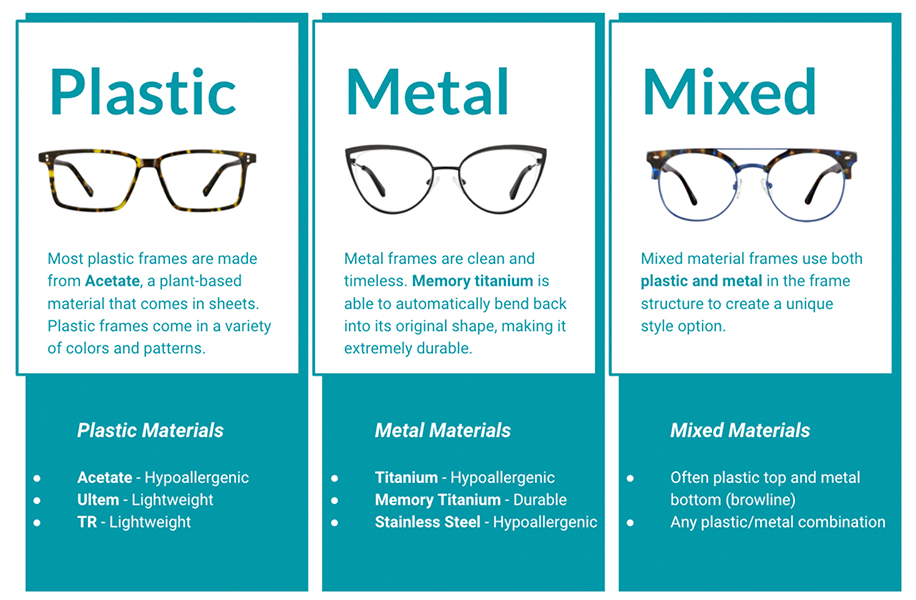
- Acetate (plastic): A popular material known for its durability, lightweight feel, and vast range of colors, patterns, and styles. Acetate frames can be molded into many unique shapes, making them versatile for fashionable
prescription glasses. - Metal: Offers a classic, sleek look and is generally strong and lightweight. Metal frames come in various finishes and materials like titanium (very light and strong), stainless steel (durable and hypoallergenic), and monel (common and malleable). They provide a timeless option for
optical correction. - Combination: Many
prescription eyeglassesframes use a mix of materials, such as metal fronts with acetate temples, or vice versa. This allows for unique designs that combine the strengths and aesthetics of different materials.
Frame styles
Frame style refers to how the frame holds the lenses. This choice impacts the overall look and weight of your eyewear.
- Full-rim: The most common style, where the frame completely encircles the lenses. Full-rim frames offer the most support and are available in the widest variety of materials and designs. They are durable and hold lenses securely in
prescription glasses. - Semi-rimless: Also called 'supra' frames, these have a frame that covers only the top or bottom part of the lenses, often using a nylon wire or groove to hold the lens in place. This style offers a lighter look and feel.
- Rimless: In this style, the lenses are attached directly to the bridge and temples, with no frame surrounding them. Rimless
eyewearis very lightweight and offers a minimalist appearance, making the glasses almost invisible on the face.
Frame shapes
Choosing the right frame shape can complement your face shape and enhance your features. Various shapes are available to suit different preferences and facial structures.
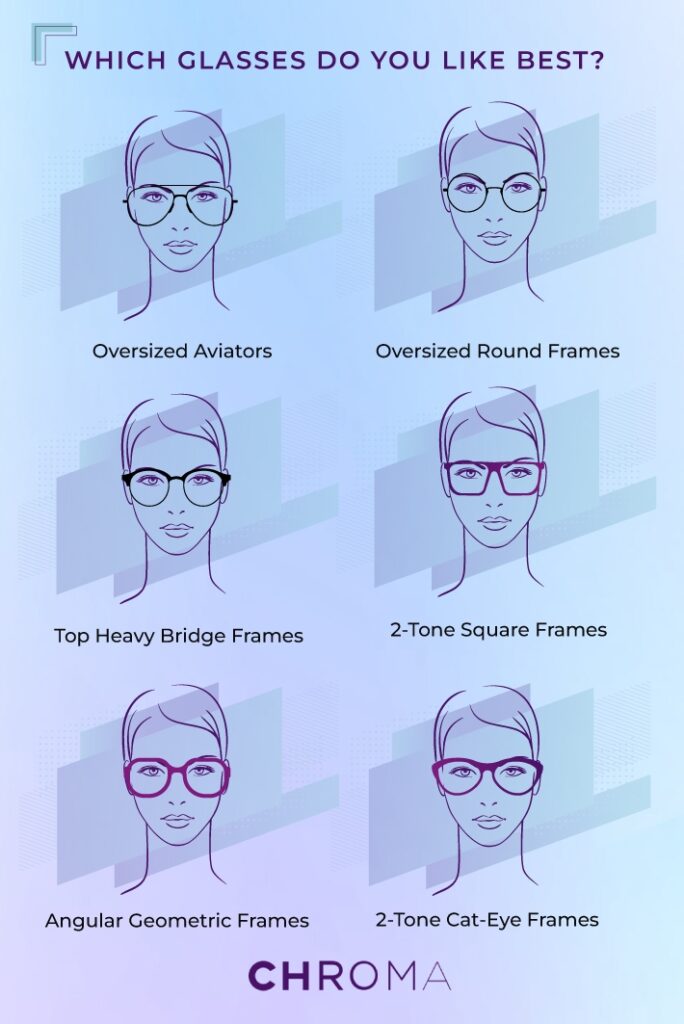
- Rectangle, oval, round, square: These are classic geometric shapes that form the base for many frame designs.
- Cat-eye: A retro-inspired shape with an upsweep at the outer edges, often associated with a feminine and stylish look.
- Aviator: Originally designed for pilots, these frames have a distinctive teardrop shape.
- Browline: Frames where the upper part (the brow) is emphasized, typically thicker or darker than the lower rim, drawing attention upwards. Considering your face shape when trying on
prescription eyeglassesframes can help narrow down options for a flattering fit.
Lenses for Prescription Eyeglasses
While frames offer style, the lenses in your prescription eyeglasses provide the actual vision correction. The materials, types, and coatings of lenses significantly impact clarity, durability, and performance. Understanding these options is essential for optimizing your optical correction.
Lens technology for glasses has advanced considerably, offering solutions for various vision needs and preferences. Choosing the right lenses involves considering your prescription strength, lifestyle, and desired features.
Lens materials
The material your lenses are made from affects their weight, thickness, and impact resistance.
- Plastic (CR-39): This is the most basic and affordable lens material. It offers good optical clarity, is lightweight compared to glass, and is suitable for low to moderate
prescription eyeglasses. - Polycarbonate: More impact-resistant than CR-39, making it an excellent choice for children, active individuals, and safety glasses. Polycarbonate lenses are also thinner and lighter than plastic, especially for higher prescriptions.
- High-index: These materials are the thinnest and lightest options available, particularly beneficial for strong
eyeglassprescriptions where standard plastic or polycarbonate lenses would be very thick. High-index lenses are recommended for a more aesthetically pleasing look with high powers.
Lens types
The type of lens determines how your vision is corrected at different distances.
- Single vision: These lenses correct vision at only one distance – either for seeing things far away or for reading up close. Most basic
prescription glassesuse single-vision lenses. - Progressive (no-line bifocals): These lenses offer a seamless transition between distance vision (top part), intermediate vision (middle corridor), and near vision (bottom part). They provide convenient
optical correctionfor presbyopia without visible lines. - Bifocal: Corrects vision at two distinct distances: distance vision in the top part of the lens and near vision in a segmented section at the bottom. A visible line separates the two powers in bifocal
prescription eyeglasses. - Trifocal: Provides correction for three distances: distance, intermediate, and near vision, with two visible lines separating the different zones. Less common now with the rise of progressive lenses.
Lens coatings and treatments
Applying coatings and treatments to your lenses can enhance their performance, durability, and comfort. These are valuable additions to many prescription eyeglasses.
- Anti-reflective (AR) coating: Also known as anti-glare coating, this reduces reflections from the surfaces of your lenses. This improves clarity, reduces eye strain (especially from screens or driving at night), and makes your
glasseslook more aesthetically pleasing as it seems like you aren't wearing lenses at all. - Scratch-resistant coating: While no lens is entirely scratch-proof, this coating adds a hard layer to the lens surface, making it more resistant to minor scratches from daily wear and tear. It helps keep your
corrective lensesclear longer. - UV protection: This essential treatment blocks harmful ultraviolet (UV) rays from the sun, protecting your eyes from potential long-term damage. Most modern lenses include UV protection as standard or can have it added.
- Blue light blocking: Designed to filter out a portion of the blue light emitted from digital screens (computers, phones, tablets). Some users find this helps reduce eye strain during prolonged screen time while wearing their
prescription eyewear.
Prescription Eyeglasses Fitting Guide
Proper fitting of your prescription eyeglasses is just as critical as having the correct lenses. A well-fitting pair of glasses is comfortable to wear throughout the day and ensures the optical centers of the lenses are correctly aligned with your pupils for optimal vision. A good fit prevents slipping, pinching, and discomfort.
Getting a perfect fit often requires precise measurements and adjustments. While some aspects can be assessed yourself, certain measurements are best left to professionals to ensure accurate optical correction.
Measuring pupillary distance (PD)
Your Pupillary Distance (PD) is a fundamental measurement for making prescription glasses. It ensures that the optical center of your lenses aligns directly in front of your pupils.
- Importance of accurate PD measurement: If the optical center of your lens is not properly aligned with your pupil, it can cause prismatic effect, leading to headaches, eye strain, and distorted vision, even with the correct prescription power. Accurate PD is non-negotiable for effective
eyewear. - How to measure PD at home: While possible using a ruler and a mirror or a friend, home PD measurement can be inaccurate. Many online retailers provide guides or tools, but results can vary. It's generally less precise than professional measurement.
- Professional PD measurement at an eye doctor's office or optical retailer: This is the most reliable method. Eye care professionals use specialized tools to measure your PD precisely, sometimes measuring for each eye separately (monocular PD). This ensures the best alignment for your
prescription eyeglasses.
Ensuring a proper fit
Beyond PD, the way the frame sits on your face is key to comfort and correct lens positioning.
- Frame width: The total width of the frame should roughly match the width of your face at the temples. Frames that are too wide or too narrow will feel uncomfortable and may not position the lenses correctly.
- Bridge fit: The bridge of the frames should rest comfortably on your nose without pinching or leaving marks. If the bridge is too wide, the glasses will slide down; if too narrow, they will pinch. Different bridge designs (e.g., saddle bridge, keyhole bridge) suit different nose shapes.
- Temple length: The temples (arms) should extend straight back to your ears and curve gently down to hold the frames in place. They shouldn't press too tightly or be too short, which would cause the
prescription glassesto feel unstable. - Adjustments:
Prescription eyeglassesframes, especially metal and some plastic ones, can often be adjusted by an optician or optical professional. Adjustments can be made to the temples, nose pads, and bridge to ensure a comfortable and secure fit that keeps the lenses correctly positioned before your eyes.
Choosing the right prescription eyeglasses involves understanding your vision needs through your prescription, selecting appropriate frames based on materials, style, and shape, opting for the best lens materials, types, and coatings for your lifestyle, and ensuring the glasses are properly fitted. By paying attention to these details, you can find eyewear that provides clear vision and feels great to wear. To explore a wide selection of prescription eyeglasses options catering to various needs and styles, you can find the right pair that fits your specific requirements and preferences. find the right pair
【Specialty Prescription Eyeglasses】
Beyond standard daily wear, prescription eyeglasses come in specialized versions designed for specific activities and needs. These options combine precise optical correction with features tailored to enhance performance, protection, or comfort in particular environments. Whether you need clear vision in bright sun, during physical activity, or while staring at digital screens, there's a specialized eyewear solution.
Exploring specialty prescription glasses ensures you have the right tool for every task. These purpose-built options address the unique demands placed on your vision and your glasses in various situations. They represent an important category within the broader world of corrective eyewear.
【Prescription Sunglasses】
Enjoying clear vision doesn't have to stop when the sun comes out. Prescription sunglasses offer the dual benefit of correcting your vision while protecting your eyes from harmful UV rays and reducing glare. They are essential eyewear for driving, outdoor activities, and simply being comfortable in bright light.
Choosing the right prescription sunglasses means finding a balance between effective vision correction, superior sun protection, and a style you love. They provide a crucial layer of optical correction for sunny conditions.
Benefits of prescription sunglasses
Combining your vision needs with sun protection provides significant advantages. Prescription sunglasses are more than just a fashion accessory; they are functional corrective eyewear for the outdoors.
- Vision correction and sun protection in one: This eliminates the need to switch between your regular glasses and non-prescription sunglasses or wear uncomfortable clip-ons. You get clear, corrected vision and UV protection simultaneously.
Polarized lensesreduce glare: Polarization is a key feature that filters out intense, reflected light, especially from surfaces like water, snow, or roads. This drastically improves visibility and reduces eye strain in bright conditions.- Available in various styles and colors: Like regular
prescription eyeglasses, sunglasses come in a vast array of frames and lens tints to match your personal style and intended use. You don't have to sacrifice fashion for function.
Choosing the right prescription sunglasses
Selecting the ideal pair of prescription sunglasses involves considering how and where you'll wear them, alongside your vision requirements. These factors influence the frame, lens features, and overall performance of your eyewear.
- Frame style and fit: Ensure the frames fit comfortably and securely. Wraparound styles or those with wider temples offer more peripheral protection from sunlight. The fit should prevent slipping during activities.
- Lens color and tint: Different lens tints affect color perception and contrast. Grey reduces overall brightness without altering color. Brown/Amber enhances contrast, good for variable conditions. Green provides good contrast and color balance. The tint can also affect visible light transmission.
UV protectionandpolarization: Always verify that the lenses offer 100%UV protectionagainst both UVA and UVB rays, as recommended by eye care professionals (as of 2025). Considerpolarized lensesif you are frequently exposed to reflective surfaces.
【Prescription Eyeglasses for Sports】
For active individuals, standard prescription eyeglasses may not offer the durability or secure fit needed for sports. Prescription eyeglasses for sports are specifically engineered to withstand impact, stay in place, and provide clear, protected vision during physical activity. This specialized eyewear is crucial for safety and performance.
Investing in dedicated sports eyeglasses can significantly improve your experience and reduce the risk of eye injury while participating in athletic endeavors. They are a vital piece of corrective eyewear for sports enthusiasts.
Features of sports eyeglasses
Prescription eyeglasses for sports incorporate design elements focused on safety, stability, and performance in dynamic environments. These features set them apart from everyday glasses.
Impact-resistantframes and lenses: Lenses are typically made frompolycarbonateor Trivex, highlyimpact-resistantmaterials. Frames are often constructed from durable, flexible plastics designed to absorb shock without breaking.Secure fitwith straps or grips: Many sports frames include integrated or optional straps to keep them firmly on your head. Rubberized nose pads and temple tips enhance grip, preventing the glasses from slipping during movement or sweating.Ventilationto preventfogging: Designs often include vents or strategic spacing to allow air flow, reducing the likelihood of lensesfoggingup during exertion or in changing temperatures.Protective eyewearfor specific sports: Some sports require specialized eye protection, such as basketball, racquetball, or skiing. Frames are designed to meet specific safety standards (like ASTM) for these activities, often with larger lens areas or side shields for enhanced coverage.
【Blue Light Blocking Prescription Eyeglasses】
In today's digital world, many people spend significant time looking at screens. Blue light blocking prescription eyeglasses are designed to mitigate potential issues associated with prolonged exposure to blue light emitted by computers, phones, and tablets. These lenses can be incorporated into your regular prescription glasses.
Adding a blue light blocking treatment to your prescription eyeglasses is a popular choice for those seeking to improve visual comfort during extended screen use. This type of eyewear addresses a modern concern related to digital device usage.
Benefits of blue light blocking lenses
Wearing blue light blocking lenses can offer several potential advantages, particularly for individuals with high digital screen time. These lenses filter specific wavelengths of light.
- Reduce
eye strainand fatigue fromdigital screens: By filtering a portion of the blue light spectrum, these lenses may help reduce symptoms of Digital Eye Strain (also known as Computer Vision Syndrome), such as dry eyes, blurred vision, and headaches. - Improve
sleep quality: Exposure to blue light, especially in the evening, can disrupt the body's natural sleep-wake cycle (circadian rhythm). Filtering blue light in the evening may help improvesleep quality. - Protect against potential long-term damage from blue light exposure: While research is ongoing, some studies suggest potential long-term retinal concerns from excessive blue light exposure.
Blue light blockinglenses are proposed as a preventive measure, though more definitive studies are needed.
Considerations for blue light blocking lenses
While beneficial for some, it's important to understand the nuances of blue light blocking technology. Not all blue light is created equal, and lens treatments vary.
- Not all blue light is harmful: Blue light exists naturally in sunlight and is important for regulating circadian rhythms during the day. The concern is primarily focused on the intensity and proximity of blue light from screens, especially at night.
- May alter color perception slightly: Some
blue light blocking lenseshave a yellow or amber tint, which can slightly alter how colors appear. Clear blue light filters exist, but their effectiveness can vary. Users may notice this color shift, particularly artists or graphic designers.
Choosing the right prescription eyeglasses, whether standard or specialty, depends on your individual vision needs, lifestyle, and preferences. From protecting your eyes in the sun or during sports to enhancing comfort while using screens, specialized eyewear provides tailored optical correction. To explore a wide range of prescription glasses options, including standard pairs and specialized designs like sunglasses or sports frames, you can find solutions for virtually any need. prescription eyeglasses
【Cost of Prescription Eyeglasses】
After exploring the diverse world of specialty prescription eyeglasses and understanding how they cater to specific needs, a natural question arises: how much do corrective lenses cost? The price of eyewear can vary significantly, influenced by several key factors. Understanding these factors helps you make informed decisions about your optical needs and budget.
Factors Affecting the Cost
The final price tag on your prescription eyeglasses isn't just one number; it's a combination of various elements related to the frames, lenses, and services. Let's break down the main components that contribute to the overall cost of your new glasses.
Frame material and brand
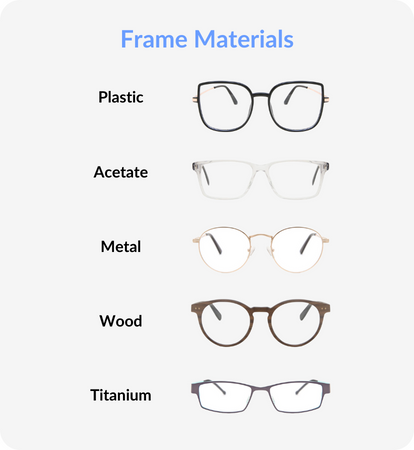
The material used to construct the frame plays a large role in its cost. Basic plastic or metal frames are typically less expensive. Materials like titanium, flexible alloys, or premium acetate command higher prices due to durability, weight, or unique aesthetics. The brand name also significantly impacts the price; designer or luxury brands carry a premium compared to generic or house brands, even if made from similar materials.
Lens material and type
The lenses themselves are a major cost driver. Standard plastic lenses (CR-39) are the most basic and affordable. Polycarbonate lenses are more impact-resistant and often recommended for children or active adults, but they cost more. High-index lenses, needed for stronger prescriptions to keep the lenses thin and light, are the most expensive material option. Lens type matters too; single vision lenses are cheapest, while multifocal options like bifocals or progressive lenses (which correct distance, intermediate, and near vision in one lens) are significantly more costly due to their complex design and manufacturing.
Additional lens coatings and treatments
Beyond the base lens material and type, various coatings and treatments can be added, each increasing the price. An anti-reflective (AR) coating reduces glare and improves clarity, but adds to the cost. A scratch-resistant coating is standard on many lenses but might be an extra charge on the most basic options. UV protection is often included but should always be confirmed. Blue light blocking filters, photochromic lenses (which darken in sunlight), or polarized filters (for sunglasses) are premium add-ons that substantially increase the total price of your prescription eyewear.
Eye exam and prescription costs
Before you even choose frames or lenses, you need an up-to-date prescription. The cost of a comprehensive eye exam is a necessary expense to determine your current vision needs. This cost is separate from the eyeglasses themselves and can vary based on location, the eye care professional, and whether you have vision insurance. Ensuring your prescription is accurate is the crucial first step in getting corrective eyewear that works effectively.
Affordable Prescription Eyeglasses
While prescription eyeglasses can be a significant investment, especially if you require specialized lenses or high-end frames, there are many ways to find affordable eyewear options without compromising on necessary optical correction. Exploring budget-friendly routes is key for many consumers looking for value.
Online retailers
One of the most popular methods for finding affordable prescription eyeglasses is purchasing through online retailers. Companies like Zenni Optical and Costco Optical (which also has a strong online presence) are known for offering a vast selection of frames and lenses at significantly lower prices compared to traditional brick-and-mortar optical shops. These platforms leverage lower overheads to provide competitive pricing on single vision, bifocal, and even progressive prescription glasses, along with various coatings.
Budget-friendly frame and lens options
Opting for more basic frame materials and lens types can drastically reduce the cost. Choosing standard plastic or metal frames instead of titanium or designer brands lowers the price. Similarly, if your prescription allows, sticking to standard index plastic lenses or polycarbonate instead of high-index lenses saves money. Prioritizing essential coatings like scratch resistance and UV protection while perhaps skipping non-essential (for your specific needs) add-ons like advanced blue light blocking treatments can also help keep costs down on your corrective eyewear.
Using vision insurance or FSA/HSA benefits
Utilizing vision insurance is a primary way to make prescription eyeglasses more affordable. Most vision plans cover a portion or the full cost of an eye exam, frames, and lenses, often with a set allowance or co-pay. Flexible Spending Accounts (FSA) or Health Savings Accounts (HSA) are also excellent options, allowing you to use pre-tax money to pay for prescription eyewear expenses, effectively reducing your out-of-pocket cost. Checking your insurance benefits or account balance before purchasing is highly recommended in 2025.
If you are looking for ways to manage the cost of your vision correction needs and explore various affordable eyewear options, researching reputable retailers and comparing prices based on your specific prescription and desired features is essential. To find a wide selection of budget-friendly eyeglasses options that can help you meet your vision needs without breaking the bank, you can explore various online and in-store providers. budget-friendly eyeglasses options
To explore a wide range of prescription glasses options, including standard pairs, specialized designs, and varying price points to suit different budgets, you can find solutions for virtually any vision need. prescription eyeglasses
【Staying Stylish with Prescription Eyeglasses】
Beyond the essential function of correcting vision, prescription eyeglasses have become a significant fashion accessory. For many in 2025, choosing the right eyewear is about finding frames that not only provide clear vision but also express personal style and enhance facial features. Understanding current trends and how to select frames for your face shape and skin tone is key to staying stylish.
Stylish Prescription Eyeglasses for Women
Choosing prescription eyeglasses for women involves balancing functionality with the latest fashion trends. The right frames can elevate your look and complement your individual aesthetic.
Popular frame trends
In 2025, popular trends in women's eyewear include oversized frames, geometric shapes like hexagons and octagons, and translucent or pastel colors. Classic styles like cat-eye frames and round glasses remain enduringly chic, often updated with thicker acetate or subtle metal accents. Sustainable materials are also gaining traction, offering eco-friendly yet fashionable options for corrective lenses.
Choosing frames that complement face shape and skin tone
Selecting frames that flatter your face shape is crucial. For round faces, angular or rectangular frames add definition. Square faces benefit from round or oval eyeglasses. Oval faces are versatile and can wear most shapes. Heart-shaped faces look great with bottom-heavy frames or cat-eye styles. Skin tone also plays a role; warm tones pair well with earthy shades, gold, and warm greens, while cool tones suit silver, black, blue, and grey eyewear.
Designer prescription eyeglasses
Many women opt for designer prescription eyeglasses to combine high fashion with vision correction. Brands like Chanel, Gucci, Prada, and Ray-Ban offer exclusive collections featuring unique designs, premium materials, and recognizable logos. Investing in designer eyewear can be a way to own a statement piece that is both functional and luxurious. These high-fashion glasses provide clear vision with undeniable style.
When exploring your options for fashionable eyewear and selecting frames that reflect your personal style while providing necessary vision correction, consider the wide array of prescription glasses available that blend trend-setting designs with quality craftsmanship. Finding frames that fit your face shape and complement your look is essential for stylish eyewear. fashionable eyewear options
Stylish Prescription Eyeglasses for Men
Men's prescription eyeglasses offer a broad spectrum of styles, from timeless classics to bold modern designs. Selecting the right pair is about finding frames that fit comfortably and project the desired image.
Classic and modern frame styles
Classic men's eyewear styles like Wayfarer-inspired frames, rectangular metal glasses, and simple round or oval shapes remain popular for their versatility and enduring appeal. Modern trends in 2025 include thicker acetate frames, matte finishes, and unique details like keyhole bridges or contrasting temples. Minimalist wire frames are also a strong trend for a sleek, understated look. These styles cater to diverse tastes for men's corrective glasses.
Choosing frames that reflect personal style
Your prescription eyeglasses are a direct reflection of your personal style. Someone with a classic wardrobe might prefer simple, understated frames, while someone with a more adventurous style might opt for colorful, geometric, or oversized eyewear. Consider your daily routine and the image you want to project, whether it's professional, creative, or casual, to guide your choice of glasses frames.
Designer prescription eyeglasses
Men seeking premium eyewear often turn to designer brands. Brands like Persol, Tom Ford, Oakley, and Ray-Ban offer a range of prescription glasses known for their quality construction, comfortable fit, and distinct styles. Designer frames often feature signature elements and durable materials, providing both excellent vision correction and a fashionable accessory. These options ensure you can find high-quality corrective eyewear that matches your lifestyle.
Exploring the vast selection of prescription glasses can help men find frames that not only meet their vision needs but also complement their personal style, ranging from classic silhouettes to the latest designs in men's eyewear. Choosing the right glasses involves considering frame shape, material, and overall design to achieve a stylish and functional result. men's stylish glasses
Celebrities with Eyeglasses
Observing how celebrities incorporate prescription eyeglasses into their public image can offer inspiration for your own style. Many well-known figures embrace eyewear not just as a necessity but as a key part of their look.
Max Muncy
One notable example is Max Muncy, the slugger for the Los Angeles Dodgers. He started wearing glasses during games due to astigmatism in his right eye, which made him slightly left-eye dominant. His clear prescription glasses are a functional requirement for playing baseball effectively but also add to his recognizable presence on the field. This highlights how corrective eyewear is essential for performance in various professions and activities.
Caring for Your Prescription Eyeglasses
Proper care is essential to keep your prescription eyeglasses in good condition, ensuring clear vision and extending their lifespan. Simple maintenance habits can make a significant difference to your vision correction device.
Cleaning lenses properly
To clean eyeglass lenses, rinse them under lukewarm water to remove debris. Apply a small drop of dish soap or specialized eyeglass cleaning solution. Gently rub both sides of the lenses and the frame with your fingertips. Rinse thoroughly. Dry the glasses with a clean microfiber cleaning cloth, which is specifically designed not to scratch the lenses. Avoid using paper towels or clothing, as these can cause scratches on your corrective lenses.
Storing eyeglasses safely
Always store your prescription eyeglasses in a protective case when you are not wearing them. This prevents scratches to the lenses and damage to the frames. Avoid leaving glasses lens-down on any surface. Do not leave them in hot places, such as on a car dashboard, as extreme heat can damage lens coatings and warp plastic frames. Proper storage is key to maintaining your eyewear.
Adjusting frames for optimal fit
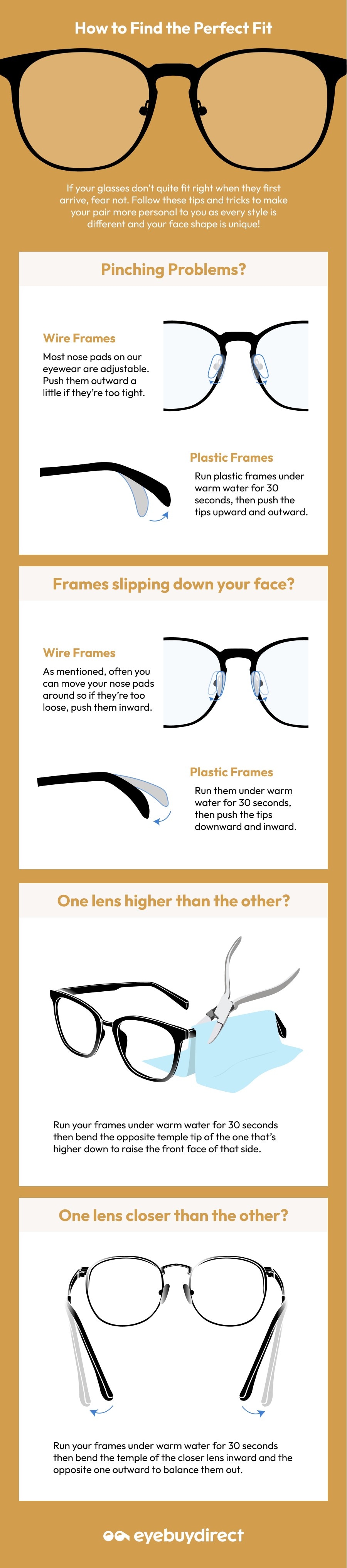
Over time, eyeglass frames may need minor adjustments to maintain a comfortable and secure fit. Metal frames can often be gently bent at the temples or nose pads. Plastic frames are less flexible and may require heating for adjustment, which is best done by an optical professional. If your prescription glasses feel too loose, too tight, or are sliding down your nose, a quick adjustment can significantly improve comfort and ensure the lenses are positioned correctly in front of your eyes for optimal vision correction.
Keeping your prescription eyeglasses clean, stored safely, and properly adjusted ensures that your vision correction is always at its best and your eyewear lasts longer. If you are looking for a wide selection of prescription eyeglasses to find a stylish and functional pair that you can properly care for, consider exploring various retailers offering diverse frames and lens options suitable for long-term use. Finding quality glasses is the first step to maintaining clear vision and style. quality glasses frames
Making Your Eyeglasses Purchase
Securing an accurate prescription is just the beginning of your journey to clearer vision. We've explored key factors like understanding your prescription details (Sphere, Cylinder, Axis, ADD, Prism, PD), where to get an eye exam (Optometrists, Ophthalmologists, Retail Shops), and the distinct advantages of buying glasses locally versus from top online retailers like GlassesUSA, Warby Parker, EyeBuyDirect, and Zenni Optical. We also covered navigating the purchase process, including crucial considerations like frame materials, lens types and coatings, choosing styles based on your face shape, understanding how to use vision insurance, HSA/FSA funds, and special considerations for veterans.
Now that you have the knowledge to make an informed decision about your eyewear needs, it's time to explore the vast options available. Click the affiliate link below to browse a wide selection of frames and lenses tailored to your "eyeglasses prescription near me" needs and discover convenient shopping from the comfort of your home. Start your search for the ideal prescription eyewear and earn commission on qualified purchases!
[Find Your Prescription Eyewear Here](https://www.mozaer.com/search?q=eyeglasses prescription near me)


Comments
Post a Comment